


Winning government contracts starts long before proposal submission. It involves identifying the right opportunities, tracking changes, coordinating teams, and making informed bid decisions.
GovFind’s AI-powered matching analyzes your business profile to deliver fast, accurate, and personalized opportunities—so you spend less time searching and more time winning.

GovFind empowers your entire team with unlimited access, visual pipeline tracking, and smart opportunity matching—so you focus on the right contracts and win together.

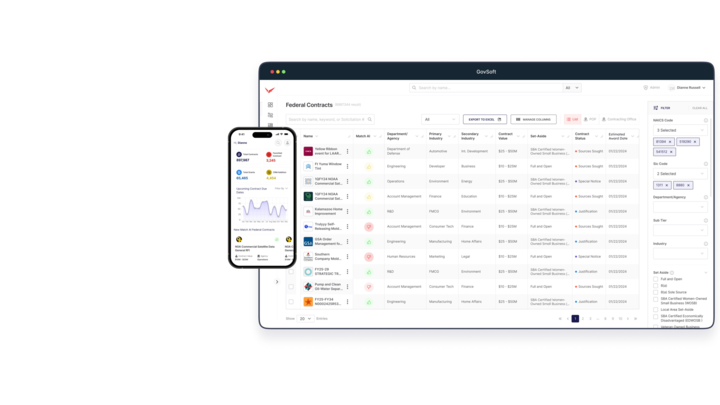
GovFind helps small businesses save time in government contracting with tools like centralized tracking, map-based search, Kanban task management, daily updates, and unlimited collaboration.

Government contracting is full of hurdles for small businesses. GovFind simplifies the process with smart search, AI matching, and real-time tracking to help you win contracts faster.

Breaking into government contracting isn’t just for defense giants or legally savvy insiders.

If you’ve spent hours scrolling through government contract listings, cross-checking deadlines, matching NAICS codes, and hoping you didn’t miss a good one, you know how draining manual search can be.

Many businesses waste time, energy, and money just trying to understand the systems that should be helping them grow.

For anyone considering government contracting, especially during uncertain times, there’s good news: Federal spending doesn’t hit pause.
Government contracting has a reputation: complex, confusing, and out of reach unless you’ve done it before.
Experience the power of seamless contract management with
a risk-free 14-day trial!